Comparing the Strength of Different Types of Fishing Line


PURPOSE

The purpose of this experiment was to compare the strength of different types of fishing line.

I became interested in this idea because my father loves to go fishing and just about every time his line breaks and he looses the fish.

The information gained from this experiment could benefit society because it would tell if 50 pound test could really hold up to 50 pounds. My study would tell just how many pounds the lines could hold.


HYPOTHESIS

My first hypothesis was the Braided Fishing line would be stronger than the Monofilament fishing line.

My second hypothesis was Microfilament fishing line would be stronger than the Monofilament fishing line.

My third hypothesis was Monofilament fishing line would be the weakest line out of all of the types of line tested.

I based my hypothesis on information on the Internet about fishing line. The sites said that the less the stretch the better the line is.


EXPERIMENT DESIGN

The constants in this study were: 
  • Type of Knot used (Palomar)
  • Diameter of line used
  • Testing device, all components
  • Testing done at room temperature
  • Speed at which gained tension was applied
  • The procedure in which line was attached to winch
  • Indicator calculates in kilograms

The manipulated variable was type of fishing lines used.

The responding variable was the force needed to break the different type of fishing line.

To measure the responding variable I made a device that increased line tension and transferred the force to the load cell. The load cell then sent information to the indicator. The indicator then displayed the force in kilograms from zero to breaking point. 

MATERIALS


QUANTITY    
    ITEM DESCRIPTION

96’’      
11/4’’x1/4’’ flat bar steel
49’’        
3’’x3’’x1/4’’
1/2’’x9’’carrage bolt with nut
1   
3/8”x41/2’’carrage bolt with nut
10’’  
13/8’’ Sch. 40 pipe
4  
5/16’’x1’’grade 8 bolts with nut
Idicator 1000 lbs. 
500 lb s-type load cell  
1500 lb oat wench  
450’  
Fluorocarbon Fishing line 50pound
450’  
Monofilament fishing line 50pound
450’  
Braided fishing line 50pound
Cans of primer
1    
Fishing hook
1
1/2’’x3/4’’ fine thread bolt  
Cans of caterpillar yellow paint
3
1x6x6 cedar fencing  
2x4x8 number 2lumber  
2
caster wheels
4    
2’’ hinges
2
barrel bolts
4    
table leg supports
1
10’’ compound miter saw  
1
10’’ metal fiber cutting blade  

3 lbs.               
Deck screws
1
Wire feed Mig. Welder
2 lbs.              
.030 Mig. Welding wire
1
5/16’’ drill bit  
2
6’’ handles
1  
1/2’’drill bit
1    
3/8’’ drill bit  
1
4’’ grinder       


PROCEDURES

1.    Build testing device

a.    Get a 1.2 cm. solid, long piece of metal.

b.    Put on safety glasses.

c.    Put on leather gloves.

d.    Measure 15 cm three times in the metal and mark at 15 cm.

e.    Measure up the mark at the 15 cm to the saw blade.

f.    Turn on the saw and cut the metal in the three spots you marked it.

g.    Turn off the saw. 

h.    Weld two of the pieces of metal together in the center on the long side.

i.    Put on your welding helmet so you don’t hurt your eyes.

j.    Put on a leather, welding chest and arm coat.

k.    Weld third piece in center where you had already welded the other two. 

l.    Weld the third piece on the long side.

m.    Weld it sitting up on its side.

n.    On the metal tube cut a 1.27 cm wide cut in it. 

o.    Cut it in a straight line.

p.    Smooth out the edges and the sharp pieces of metal where you had cut the straight 1.27 cm wide cut.

q.    Fit the half, inch wide cut to be just wide enough so that the metal piece you made in step eight has a little extra space to slide.

2.    Tie the Palomar knot

a.    Double about 5 inches of line, and pass through the eye.

b.    Tie a simple overhand knot in the double line, letting the hook hang loose. Avoid twisting the lines.

c.    Pull the end of loop down, passing it completely over the hook.

d.   Pull both ends of the line to draw up the knot.

3.    Cut each type of fishing line at 152 cm. 

4.    Conduct trials.

a.    Take the fishing line.

b.    Put fishing line in the hole in winch that has an indent in it that is facing the bar at the end of the device and tie a knot in it so it doesn’t slip out.

c.    Turn the winch forward so there are two loops all the way around it then put the line in the middle of the two and go around it only one time.

d.    Tie the Palomar Knot in the middle of the fishing line at end of the fishing line tie it off on the solid metal triangle holding the bar.

e.    Switch the scale to measure kilograms.

f.  Turn the winch slowly while carefully reading the force on the indicator until the line breaks. 

g.    Record the data.

h.    Repeat 4a-g with same type of line 4 more times.

5.   Record all the data.

6.    Average all trials for each knot type.

a.    Add all the data for one type of line and the divide it by five, because that is how many      recordings there should be

b.    Repeat 5-6b with each type of fishing line. 


RESULTS

The original purpose of this experiment was to compare the strength of different types of fishing line.

The results of the experiment were that the Monofilament was the strongest fishing line I tested. To my surprise the Braided fishing line was the weakest.


CONCLUSION


My first hypothesis was the Braided Fishing line would be stronger than the Monofilament fishing line. 

The results indicate that this hypothesis should be rejected because the Braided fishing line was the weakest.

My second hypothesis was Microfilament fishing line would be stronger than the Monofilament fishing line.

The results indicate that this hypothesis should be rejected because the Monofilament fishing line was the strongest line tested.

My third hypothesis was Monofilament fishing line would be the weakest line out of all of the types of line tested.

The results indicate that this hypothesis should be rejected because the Monofilament fishing line was the strongest line tested.

After thinking about the results of this experiment, I wonder if the type of knot used would change the results of the strength of the fishing line.

If I were to conduct this project again I would do more trials and make sure I used the same amount of line for each type of fishing line.


Researched by --- Brittney S


Read More

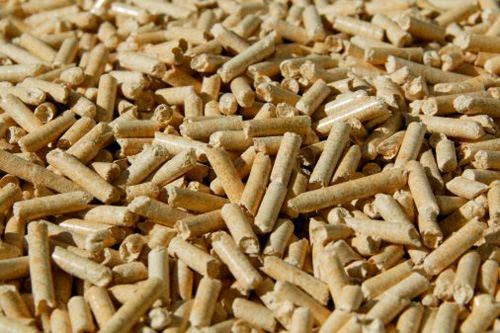
Comparing Wood Pellets for Heat Output and Burn Time


PURPOSE

The first purpose of this experiment was to find which brand of wood pellets would burn the longest.

My second purpose was to find which brand of wood pellets would burn the hottest.

I became interested in this idea after we bought our wood pellet stove. All of my parents’ friends told us of many different brands of wood pellets that burned the longest and the hottest.

The information gained from this experiment could help consumers who own a wood pellet stove know which brand of wood pellets burn the longest and hottest.  

HYPOTHESIS

My first hypothesis was that Bear Mountain Pellets would burn the longest.

My second hypothesis was that Lignetics Wood Pellets would burn the hottest.   

I based my first hypothesis on my own experience using Bear Mountain Pellets. I had found that 18.1 kg burned for 36 hours.

 I based my second hypothesis on the fact that the Lignetics Wood Pellets cost the most. Sometimes you get what you pay for.

EXPERIMENT DESIGN

The constants in this study were:

•    The same level of burning (high)

•    The same beginning temperature 

•    The same Pellet Stove (Pioneer Bay Pellet Insert)

•    The same beginning weight of the wood pellets (2.5 kg)

•    The same placement of the thermometer (middle of grill)

•    The same number of trails (3)    

The manipulated variables were different brand of wood pellets inserted into the pellet stove. 

The responding variable was the time it took the pellet stove to burn 2.5 kg of wood pellets. Also the average temperature of the pellet stove.

To measure the responding variables I timed in minutes how long it took the wood pellet stove to burn the different brands of wood pellets. Also I measured the average temperature of the wood pellet stove in degrees Celsius using an over thermometer. 

MATERIALS


QUANTITY    
        ITEM DESCRIPTION

1
18.1 kg bag of Bear Mountain Pellets
1
18.1 kg bag of Lignetics Wood Pellets
1
18.1 kg bag of N. Idaho Energy Logs Inc Wood Pellets
1   
18.1 kg bag of Hot Shots Wood Pellet Fuel
1   
Pioneer Bay Wood Pellet Stove
Oven Thermometer
Stop Watch
1
Recording Sheet (Table)
1
Triple Beam Balance  


PROCEDURES

1.      Clean the wood pellet stove removing all pellets and make sure that it is cooled down.

2.      Place 2.5 kg of Bear Mountain Pellets into the stove. 

3.      Place the thermometer on the grill so that it is in the middle. 

4.      Turn the pellet stove on high and start the timer.

5.      Every 20 minutes record the temperature on the thermometer.

6.      After the pellets have burned completely record the time.

7.      Now record the maximum temperature.

8.      Repeat steps 2-7 two more times with the same brand of wood pellets.

9.      Repeated steps 2-8 but change the brand of wood pellets to Lignetics. 

10.    Repeated steps 2-8 but change the brand of wood pellets to North Idaho Energy Log Inc.

11.    Repeated steps 2-8 but change the brand of wood pellets to Hot Shots

12.    Find the average time and temperature for each brand.


RESULTS

The original first purpose of this experiment was to find which brand of wood pellets would burn the longest. 

My original second purpose was to find which brand of wood pellets would burn the hottest.

The results of the experiment were that North Idaho Energy Logs Incorporated wood pellets had the longest burning time of 111 minutes. Hot Shots wood pellets had the second longest burning time of 107 minutes then Bear Mountain with 100 minutes., and Lingnetics with 96 minutes. Bear Mountain had the maximum temperature of 150°C. then Lingnetics with 138°C., then Hot Shots with 123°C, then N. I. E. L. Inc with 120°C. After reading over the data the best overall wood pellet brand would be Bear Mountain and North Idaho Energy Logs Inc.    

CONCLUSION

My first hypothesis was that Bear Mountain Pellets would burn the longest.

The results indicate that my first hypothesis should be rejected, because Bear Mountain wood pellets were third. First was N. I. E. L. Inc. with 111 min. and second was Hot Shots with 107 min.

My second hypothesis was that Lignetics Wood Pellets would burn the hottest.   

The results indicate that my second hypothesis should be rejected, because Lingnetics wood pellets did not burn the hottest. Bear Mountain did. 

After thinking about the results of this experiment, I wonder if the type of wood pellet stove would affect the outcome. 

If I were to conduct this project again I would conduct more trials. I would also use a larger amount of wood pellets per test. I’d use a more exact temperature measurement, such as a computerized thermo-couple. 


Researched by ---  Brandon R


Read More

Effect of Various Common Household Cleaners on Fabric Puncture Resistance


PURPOSE

The purpose of this experiment was to determine the effect of various common household cleaners on fabric puncture resistance.

I became interested in this idea because I thought it would be fun to see what some household cleaners do to clothes.

The information gained from this experiment could help people be more careful when using household cleaners. 


HYPOTHESIS

 My first hypothesis was that both polyester and cotton treated with chlorine bleach would have less puncture resistance than untreated cotton and polyester.

My second hypothesis was that both polyester and cotton treated with ammonia would be weaker than untreated polyester and cotton.

My third hypothesis was that ammonia wouldn’t weaken the fabric as much as chlorine bleach. 

I based my hypotheses on an article in The World Book Encyclopedia. It says,” chlorine bleaches are made for cleaning tough things such as driveways.” 


EXPERIMENT DESIGN

• Fabrics used in test

• Cleaners (concentration and type used within each treatment group)

• Amount of cleaner added to the fabric

• Where the cleaner goes on the fabric

• Size of fabric pieces

• The scale to measure force 

• The wood frame to hold cloth

The manipulated variable was the household cleaner applied to the cloth.

The responding variable was the force it took to puncture the fabric.

To measure the responding variable I used a bathroom scale to determine the force applied to the cloth, recording the force at the time the cloth was punctured.

MATERIALS


QUANTITY 

ITEM DESCRIPTION
1
scale
1
wood frame
1
sq. yard of cotton
1
sq. yard of polyester
6oz.
bleach
1  
wood puncture rod
6oz
ammonia
2
pairs of rubber gloves
lab goggles
1
paint mask
“C” clamps
lab coat
1
square yard of plywood
2
glass bowls
1       
glass measuring cup


PROCEDURES

1. Build a wood frame to hold fabric pieces for testing.

a. Cut two 12in. by 12in. squares from plywood.

b. Draw a 9in. by 9in. square centered 1.5 in. from each edge inside the plywood squares. 

c. Drill a hole in each of the four corners of the inner squares.

d. Then cut out both inner squares.

e. Now use four clamps to hold the fabric pieces tightly sandwiched between the two halves of the wood frame.

2. Glue the two cut out 9 x 9 inner squares together in a sandwich.

3. Drill a 1 in. diameter circle in the center of the two glued together squares.

4. Then glue a 1 in. diameter rod about 5 in. tall into the drilled hole.

5. Next cut nine 12 in. by 12 in. squares out of cotton cloth and do the same thing with polyester cloth.

6. Now you have to soak the fabrics.

a. Place one piece of cotton in a glass dish.

b. Use the glass measuring cup to measure 180 ml of ammonia and poor it onto the cotton.

c. Let the cotton soak for 5 minutes 

d. Pull the cloth sample out and sit on newspaper to dry

e. Repeat steps 6.a–d two more times with cotton and three times with polyester.

f. Then repeat steps 6.a–e with bleach instead of ammonia.

7. Place the puncture rod on the scale.

8. Once all fabric is dry place one piece of the non-soaked (control group) polyester in the wood frame and tighten the four clamps, 

9. Using caution, apply increasing downward force to the fabric in the frame against the wood rod.

10. Carefully watch the scale readout.  When the rod pops through the fabric record the weight the scale shows.

11. Repeat steps 8-10 with the rest of the non-soaked polyester and cotton.

12. Repeat steps 8-11 but with the ammonia group. 

13. Repeat steps 8-11 but with the bleach group.


RESULTS

The original purpose of this experiment was to determine the effect of various common household cleaners on fabric puncture resistance.

The results of the experiment were for the controlled group, polyester punctured at about 90.7 kg. and cotton punctured at about 31 kg. For the ammonia group, polyester punctured at about 90.7 kg. and cotton punctured at about 28.7 kg. For the bleach group, polyester punctured at about 81.6 kg. and cotton punctured at about 13.6 kg.

CONCLUSION

My first hypothesis was that both polyester and cotton treated with chlorine bleach would have less puncture resistance than untreated cotton and polyester.

The results indicate that my first hypothesis should be accepted because both types of fabric were weaker when treated with bleach.

My second hypothesis was that both polyester and cotton treated with ammonia would be weaker than untreated polyester and cotton.

The results indicate that my second hypothesis should be rejected because ammonia didn’t affect polyester. It did weaken the cotton.

My third hypothesis was that ammonia wouldn’t affect the fabric as much as chlorine bleach. 

The results indicate that my third hypothesis should be accepted because bleach affected both polyester and cotton and ammonia didn’t.

Because of the results of this experiment, I wonder if soaking the fabric longer in the cleaners would have affected the fabric more.

If I were to conduct this project again I would use an industrial tensile strength machine so my data would be more accurate. I would also use a weaker fabric than polyester, like silk. I would also add another household cleaner. I would also add another natural fabric like wool. I would especially do more trials. 


Researched by -- Zach F


Read More
Home About-us Privacy Policy Contact-us
Copyright © 2017 www.sciencefairprojects.in | All Rights Reserved. Design By Templateclue